
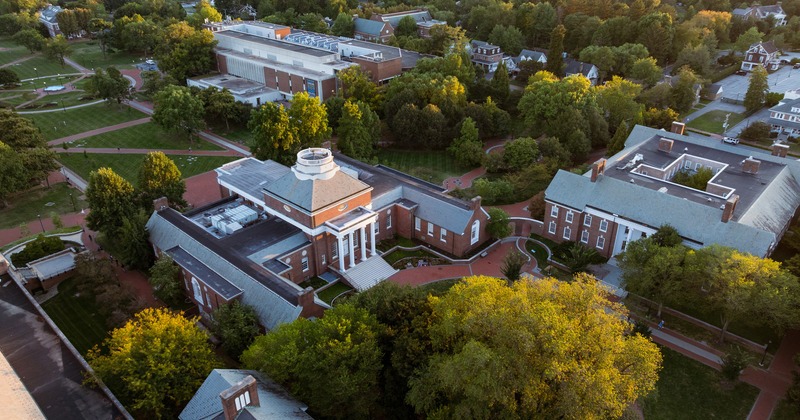
How I Used My University
Your university can be one of the most valuable resources you have as a student founder, and you do not necessarily need to be building university-owned technology to take advantage of it.
I have received nearly $40K in non-dilutive awards from my university alone, despite my technology not being developed through or affiliated with the university. On top of that, essentially my entire advisory network is made up of university alumni or staff who I personally found and recruited because of their experience in the industry I am building in. I have also used university entrepreneurship programs, pitch competitions, mentors, facilities, and connections to help move the company forward.
Especially when you are starting with very little money or experience, your school may give you access to things that would otherwise cost thousands of dollars or take years to build on your own.
Start With Your Entrepreneurship Program
If you have an idea and genuinely have no idea what to do next, your university's entrepreneurship program should probably be one of your first stops. Most universities have some version of an entrepreneurship center, innovation hub, startup program, incubator, or faculty dedicated to helping students build companies.
The people working there have usually seen hundreds of early-stage companies and can help you understand where to begin. They may be able to connect you with:
Customer discovery and business-model resources
Pitch coaching
Funding opportunities
Incorporation and legal assistance
Professors or alumni relevant to your industry
Accelerators and incubators
Other student founders
Potential cofounders or early team members
That last part is especially valuable. Being around other student founders gives you access to people who are going through many of the exact same problems you are. You might meet someone who has already won the competition you want to enter, found a grant you had never heard of, built a product similar to yours, or knows exactly who on campus you should talk to.
You do not need to figure everything out alone when there are already people at your school whose job is literally to help students build companies.
Find the Free Money and Programs
One of the biggest advantages of being a student founder is access to university-specific non-dilutive funding. A large portion of universities run pitch competitions, sometimes exclusively for their own students and sometimes for students nationally or internationally. If yours does not, or you simply want to find more, check out our list of 40+ up-to-date external non-dilutive funding opportunities.
My university runs a series of three pitch competitions through which I have personally won $26K. But pitch competitions are only one source of university funding. Depending on your school, look for:
Pitch competitions
Startup grants
Prototype or microgrants
Summer founder fellowships
Accelerator or incubator funding
Innovation awards
Travel funding for competitions
Research or commercialization grants
A $2,000 or $5,000 award might not sound massive, but when your company is still at the idea or prototype stage, that money can go incredibly far. It also begins building your track record. Winning your first $2,500 can help you win your next $10,000 because you can now show that someone else has already evaluated the company and decided it was worth funding.
Universities also frequently run accelerators, incubators, and other structured founder programs. These can be great places to refine your pitch, conduct better customer discovery, set development milestones, meet mentors, find cofounders, and connect with investors. Some provide funding, but even when they do not, the network can be worth far more than the program itself. One introduction to the right advisor, attorney, investor, manufacturer, or future team member can completely change the direction of your company.
Use Your Alumni, Staff, and Professors
This is one of the biggest university advantages I think student founders underuse and one that I have touched on in multiple resources. There is a good chance that someone who went to your school—or currently works there—has significant experience in the exact industry you are entering.
Find them. Use LinkedIn, Google, alumni directories, faculty pages, university health systems, entrepreneurship staff, professors, and introductions from people you already know. Look for people who have built companies, commercialized similar products, raised capital, worked at major companies in your industry, or developed expertise in an area where you need help. For more on recruiting and retaining skilled advisors, start here.
That shared university connection gives you an immediate reason to reach out. A message along the lines of “I'm a student at your alma mater building something in an industry where you have significant experience, and I'd love to get your perspective” is much easier for someone to respond to than a completely random cold request.
Professors can be equally valuable. Depending on what you are building, they may be able to challenge technical assumptions, recommend research, connect you with labs, introduce you to industry experts, point you toward grants, or recommend talented students. My own advisory network is largely composed of alumni and staff, and that university connection was often what initially opened the door.
As you build these relationships, let one connection lead to another. Ask people you trust:
“Is there anyone else you think I should be talking to?”
You might meet someone through your entrepreneurship center who introduces you to an alumnus, who becomes an advisor, who introduces you to an industry executive, who eventually introduces you to an investor. This is how your university network starts becoming an industry network.
Use the Free Resources Around You
Before paying for something, figure out whether your school already provides it.
Many universities offer startup resources such as:
Entrepreneurship or law-school legal clinics
Free attorney office hours
Incorporation assistance
Basic contract or IP guidance
Accounting and financial support
Makerspaces
3D printers
Machine shops
Electronics and engineering labs
CAD and software tools
Design and fabrication equipment
Legal expenses in particular can become painful very quickly for an early-stage company. University resources will not replace specialized attorneys forever, but they can often help you understand the basics before you start writing checks.
The same goes for product development. If you are building a physical product, you may not need to immediately hire a professional development firm or manufacturer. Your first prototype might be something you build in a campus makerspace using a 3D printer or equipment you already have access to. At that stage, the goal is often just to test the concept, learn something, and build the next version. For more on this, check out How to Build Your First Prototype Without Spending a Fortune
Your campus is also full of talented students studying engineering, computer science, design, business, finance, marketing, biology, communications, and just about anything else you could need. Student organizations, entrepreneurship clubs, hackathons, professors, and classes can all be places to find early collaborators, interns, and potentially future team members.
One important caveat: if you are using university-funded research, faculty inventions, laboratories, or significant university resources to develop intellectual property, understand your school's ownership and IP policies before assuming everything you create belongs entirely to you.
The Biggest Takeaway
Being a student gives you access to an ecosystem that you may never have again. You potentially have free money, experienced mentors, alumni, professors, legal assistance, talented teammates, prototyping equipment, accelerators, competitions, investors, and other founders sitting around you.
Start with your entrepreneurship center. Find every funding opportunity your school offers. Search your alumni network for people who have already done what you are trying to do. Use campus resources to build your first prototypes. Talk to professors. Meet other founders. Enter the competitions. Apply to the accelerator.
You do not need your technology to have been invented at the university to benefit from the ecosystem around it.
Your university is much more than the place where you take classes. While you are a student, it may be one of the biggest unfair advantages you have as a founder.